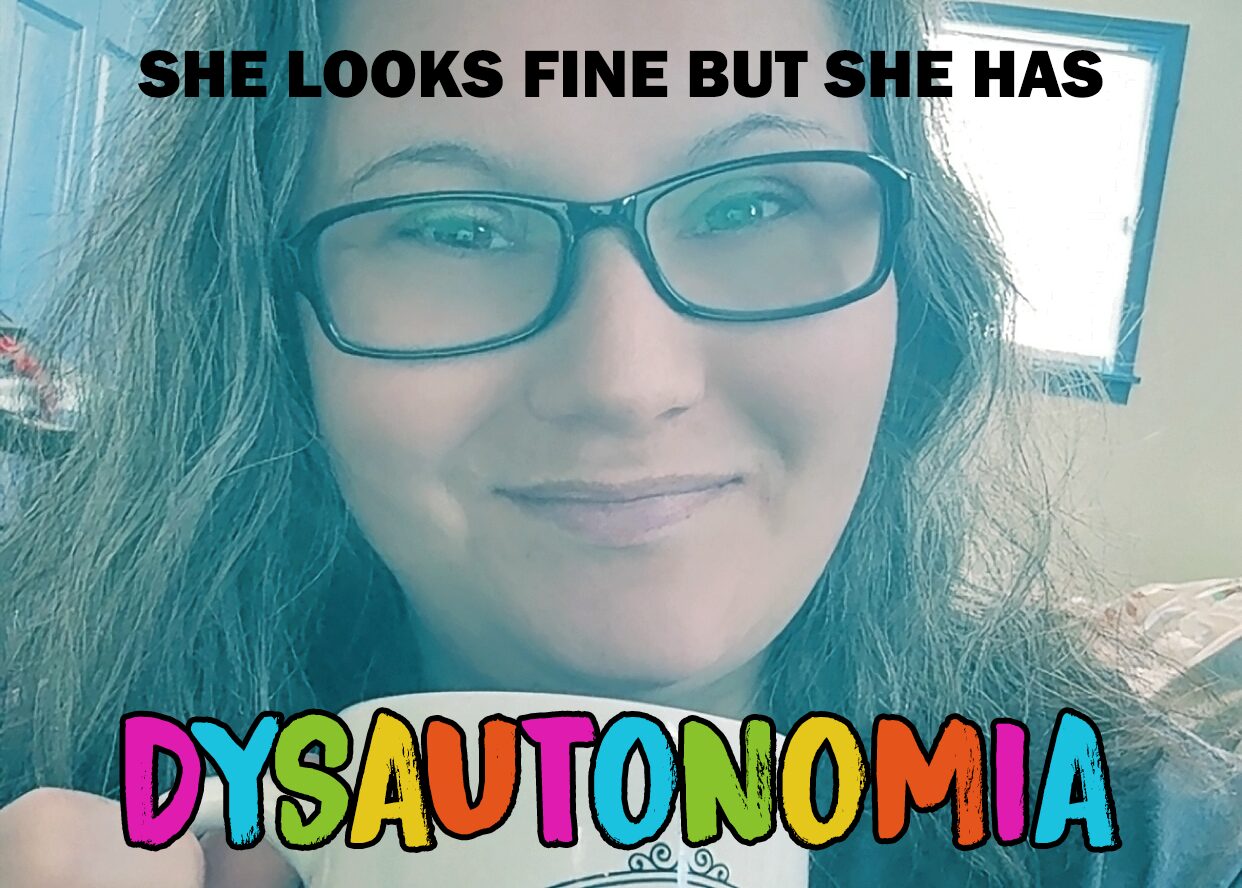
Two years ago today, I visited a cardiologist for a bi-annual checkup. I had been experiencing some heart-related issues connected to a disorder I have had all my life called vasovagal syncope (also called neurocardiogenic syncope). I was starting to notice some new triggers and I was concerned, so I did the right thing and reached out to my doctor, who sent me to a cardiologist for testing. I had to wear a heart monitor for 30 days, and to my dismay everything came back pretty normal and my doctors simply reiterated the same tips I’d heard for years: stay hydrated, avoid your triggers as best as you can, and try to take your time when getting up from sitting or lying down.
Vasovagal syncope is a condition in which you faint a lot because your body overreacts to certain triggers (which are different for everyone who has this condition). When I was really little, we didn’t know the name of what I had, so we just called my episodes “blackouts”- we didn’t know there was an actual name for the disorder til I was a teenager. Normally it’s not life-threatening, but in some cases your heart can actually stop- which mine does sometimes. A tilt-table test done in my late teens confirmed that my heart will sometimes stop during an episode, and then my body restarts itself, kind of like a computer rebooting. It doesn’t happen every single time, but it happens often enough that I started having to see cardiologists in my teenage years to make sure my heart is not being damaged because of these blackouts. My main trigger is pain, but over time extreme temperatures, the sight of blood, and low blood pressure have become issues for me as well. If I stub my toe or slam my finger in a cabinet, I know I’m going down.
Growing up with vasovagal syncope meant learning to listen to my body from a very young age. Right before I pass out, I get very pale and usually get really nauseous, hear ringing in my ears, and get tunnel vision just before I lose consciousness. My dad also had the disorder, so he and my mom talked to me when I was young about making sure I paid attention to the warning signs and getting to the ground if I could before I passed out. As long as I can get to the ground in time, I don’t usually hurt myself too badly, but there have been a few times when that wasn’t possible and I have been hurt pretty badly, resulting in things like bruises and chipping my front teeth. I also seize during the episodes sometimes, and that usually leaves me feeling like I got beat with a baseball bat. It’s not fun. After I wake up from passing out, I am always extremely exhausted. It takes all my energy, and I need a lot of rest and water to recover. After some rest and hydration I’m fine, but the older I get, the longer it takes for me to get my strength back after passing out.
Fast forward to last summer. I have always struggled in extreme temperatures, but I started noticing that even walking to and from my mailbox in the summer heat took a lot out of me, and I was worried. My mailbox sits at the end of a very long driveway, and by the time I walked down to get my mail and back to the house, my heart would be racing and I’d be short of breath and dizzy. I’m only 43 years old; walking to the mailbox shouldn’t leave me feeling like I just tried to run a marathon. I also noticed that once I got overheated, it took a lot longer to cool down and stop sweating. I started having to make sure I didn’t go outside unless it was early in the day or late in the evenings, and I had to make plans around the need to stay out of the summer heat. I know I’m no spring chicken, but I felt embarrassed that at my age I had to rearrange my life around my condition, and I was worried enough that I decided it was time to talk to my doctor.
My doctor here in Tennessee is awesome; she truly listens to her patients and really takes every precaution to find out what’s causing issues. She listened to my concerns and started asking a lot of questions about my triggers and symptoms. After a little while of talking, she asked me if I had ever been diagnosed with dysautonomia. I said no, but that I had heard the term mentioned in the Facebook groups I’m in for my VVS. She explained what dysautonomia is, and told me that based on the symptoms I was having, she was pretty sure I had it. As my doctor listed off symptoms of the disorder, suddenly a lot of things about my life started making a lot more sense: not being able to exercise for long periods of time, intolerance to extreme heat, excessive sweating, shortness of breath when exposed to extreme temperatures, extreme fatigue, brain fog, increased urination, and more. Not only that, but VVS is common in people with dysautonomia; a lot of people who have one disorder have the other as well. All these things I had always chalked up to just being out of shape or “getting old” were suddenly explained, and made me feel a lot less crazy or embarrassed. She recommended me getting an Apple Watch or something similar to track my heart rate when I noticed changes, or when I felt faint, as well as increasing my water and salt intake, wearing compression socks, and avoiding excessive heat when I could. I started implementing these changes, and the difference I felt was pretty wild; my doctor officially diagnosed me with dysautonomia in the fall of last year.
After my initial conversation with my doctor about dysautonomia, I started doing a lot of research about the disorder and I was amazed at how many of the symptoms I have- and how no other doctor had ever talked to me about the disorder before. I’ve passed out a LOT throughout my life- and in some very public situations, unfortunately- so I was kinda shocked that none of my doctors through the years had ever thought to connect the two conditions. However, I will say that it seems that the research surrounding both of these conditions was pretty scarce until recent years, so I don’t think a lot of doctors I saw were familiar with the conditions. Now a quick Google search makes it easy to find information about both dysautonomia and vasovagal syncope and connect with others who have the disorders; it wasn’t like that for a long time. I’m grateful to have access to the info out there so I know I’m not the only “freak” out here living with these disorders. LOL
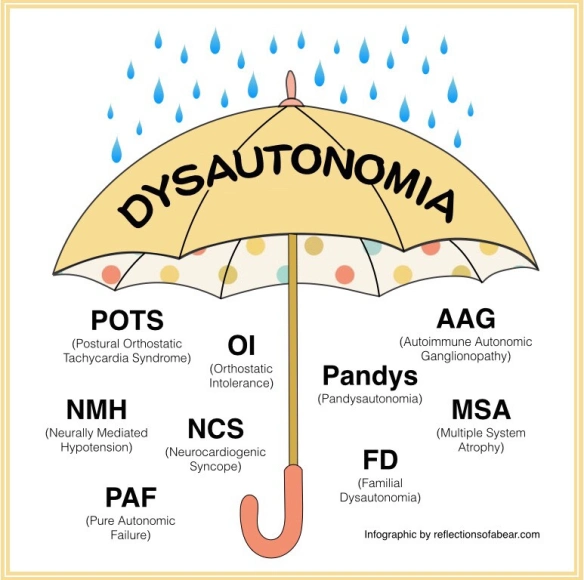
Here’s an awesome infographic created by Reflections of a Bear that shows a lot of the disorders that are linked with dysautonomia. VVS is referred to as NCS (neurocardiogenic syncope) here. It really helps you realize how many bodily functions this disorder affects:
I’m really grateful to finally understand why my body does what it does in certain situations. I still get a little embarrassed about my conditions sometimes, but it’s not something I can help- my nervous system is just wired differently than most others.